















The $72 Billion Secret They Don’t Want You to Know
Why the diet industry is terrified of these 5 simple eating habits
The diet industry makes $72 billion a year selling you complicated meal plans, expensive supplements, and restrictive programs that fail 95% of the time.
But what if I told you there are 5 simple daily eating habits that can transform your body without buying a single diet product, counting a single calorie, or eliminating entire food groups?
Here’s the secret they’re desperately trying to hide: Body transformation isn’t about what you eat—it’s about how and when you eat.
These 5 habits are so effective at resetting your metabolism and restoring your body’s natural hunger signals that they could put the entire diet industry out of business. That’s why you’ll never see them advertised on weight loss commercials or promoted by supplement companies.
They can’t make money off habits that actually work.
But buried in medical journals and university research labs, scientists have been quietly documenting something remarkable: people who follow these 5 eating patterns naturally maintain healthy weights without willpower, restriction, or constant struggle.
The research is there. The proof is overwhelming. But it’s being overshadowed by an industry that profits from your repeated failures.
Today, that changes.
Meet Sarah: The Mom Who Discovered the Truth
Sarah, a 42-year-old working mother from Portland, had tried everything. Keto, paleo, Weight Watchers, juice cleanses—you name it. Each time, she’d lose 15-20 pounds, feel proud for a few months, then watch helplessly as the weight crept back on.
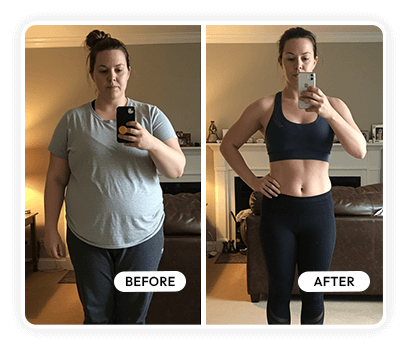
“I felt like such a failure,” Sarah recalls. “I’d blame myself for lacking willpower or discipline. I thought I was broken.”
But Sarah wasn’t broken. She was trapped in a system designed to fail.
The breakthrough came when Sarah stumbled across a research study from the Salk Institute that had nothing to do with dieting. Scientists were studying how meal timing affects metabolism in people with metabolic syndrome—and they discovered something the diet industry doesn’t want you to know.
It’s not about eating less. It’s about eating smarter.
Sarah decided to test their findings on herself, implementing 5 simple eating habits based on this “underground” research. No special foods. No expensive supplements. No counting anything.
The results? In 6 months, Sarah lost 35 pounds and has kept it off for 3 years. But more importantly, she feels energetic, sleeps better, and never experiences the crushing hunger that destroyed her previous attempts.
“For the first time in my adult life, I’m not fighting my body,” she says. “These habits feel natural, almost effortless.”
The Underground Research They Don’t Want You to See
While the diet industry was busy creating their next billion-dollar scheme, legitimate researchers at institutions like Johns Hopkins, the Salk Institute, and Harvard were making discoveries that could revolutionize how we think about weight and health.
Here’s what they found:
A 2023 study published in Nature Medicine followed 209 adults at risk for type 2 diabetes. Those who practiced time-restricted eating showed superior improvements in blood sugar regulation compared to traditional calorie restriction—without counting a single calorie.
Research from the Salk Institute revealed that one in three Americans has dysfunctional metabolism, but simple meal timing changes could restore normal metabolic function in just 3 months.
Johns Hopkins researchers discovered that specific eating patterns trigger what they call “metabolic switching”—where your body becomes dramatically more efficient at burning fat for energy.
The most shocking finding? These habits work so well that pharmaceutical companies are scrambling to create drugs that mimic their effects. Why spend decades developing expensive medications when the solution is sitting right in front of us?
The 5 Habits That Transform Everything
Habit #1: Eat Within Your Natural 12-Hour Window
What the research shows: Scientists at the Salk Institute found that limiting eating to a consistent 8-10 hour window each day triggers profound metabolic improvements. Participants saw better blood sugar control, reduced inflammation, and natural weight loss—without changing what they ate.
Why it works: Your body operates on a 24-hour circadian clock. When you eat around the clock, you disrupt these natural rhythms, leading to metabolic dysfunction. Time-restricted eating allows your digestive system to rest and repair, while activating cellular cleanup processes that only happen during fasting periods.
Sarah’s experience: “I stopped eating after 7 PM and didn’t eat again until 7 AM the next day. Within two weeks, I stopped craving late-night snacks entirely. My body just naturally wanted to stop eating earlier.”
The transformation: Better sleep quality, reduced bloating, automatic portion control, and steady energy levels throughout the day.
Habit #2: Start Every Meal with Protein
What the research shows: A comprehensive meta-analysis published in Physiology & Behavior found that protein consumption triggers the release of satiety hormones including GLP-1, cholecystokinin, and peptide YY, while suppressing the hunger hormone ghrelin.
The numbers: People who started meals with 20-30 grams of protein experienced a 7-point reduction in hunger (on a visual scale), a 10-point increase in fullness, and consumed significantly fewer calories throughout the day—without trying to eat less.
Why it works: Protein sends powerful signals to your brain that you’re satisfied. It also has the highest “thermic effect” of all macronutrients, meaning your body burns more calories just digesting it. Most importantly, adequate protein preserves muscle mass during weight loss, keeping your metabolism high.
The transformation: Reduced cravings, steady blood sugar, natural appetite control, and faster metabolism.
Habit #3: Hydrate Before You Caffeinate
What the research shows: Johns Hopkins researchers found that mild dehydration—which affects most Americans—is often mistaken for hunger by the brain. Dr. Melina Jampolis, a physician nutrition specialist, explains: “You may be able to decrease appetite by drinking water if you are, in fact, low in water not calories.”
Studies show that drinking 16-20 ounces of water upon waking can increase metabolic rate by up to 30% for the next 90 minutes. The body expends energy to warm the water to body temperature, creating a natural metabolic boost.
Why it works: After 7-8 hours without fluid intake, your body is naturally dehydrated. This dehydration slows metabolism, impairs digestion, and sends false hunger signals. Morning hydration kickstarts your metabolic processes and helps your body distinguish between true hunger and thirst.
The transformation: Clearer thinking, reduced “fake hunger,” improved digestion, and natural appetite regulation.
Habit #4: Eat Slowly and Mindfully
What the research shows: It takes approximately 20 minutes for satiety signals to travel from your stomach to your brain. People who eat quickly consistently consume more calories because they bypass these natural fullness cues.
Research published in the American Journal of Clinical Nutrition found that people who ate slowly consumed 22% fewer calories than those who ate quickly, without feeling less satisfied.
Why it works: When you eat slowly, you give your digestive system time to release hormones that signal fullness. You also improve digestion and nutrient absorption. Fast eating triggers stress hormones that can promote fat storage, especially around the midsection.
The transformation: Natural portion control, better digestion, reduced bloating, and greater meal satisfaction.
Habit #5: Stop Eating 3 Hours Before Bed
What the research shows: Eating close to bedtime disrupts multiple biological processes. It interferes with growth hormone release (which happens primarily during sleep), impairs sleep quality, and prevents the overnight fasting period that’s crucial for cellular repair and fat burning.
Studies show that people who stop eating at least 3 hours before bed have better metabolic markers, sleep more soundly, and maintain healthier weights long-term.
Why it works: Your body’s metabolism naturally slows in the evening as it prepares for sleep. Late-night eating forces your digestive system to work when it should be resting, disrupting sleep and preventing the natural overnight fast that triggers fat burning and cellular cleanup.
The transformation: Better sleep quality, morning energy, natural weight management, and improved metabolic function.
Why These Habits Work Together
Each habit supports the others, creating a synergistic effect that’s more powerful than the sum of its parts:
- Time-restricted eating gives your metabolism regular periods of rest and repair
- Protein-first meals provide sustained satiety within your eating window
- Morning hydration optimizes metabolic function for the day ahead
- Mindful eating helps you stay in tune with your body’s natural signals
- Early meal cutoff ensures quality sleep and overnight fat burning
Sarah discovered this compound effect firsthand: “Each habit made the next one easier. Once I was hydrated and eating protein first, I naturally wanted to eat more slowly. And when I stopped eating earlier, I slept better and woke up actually hungry for breakfast—not just craving caffeine.”
The Metabolic Reset: What Really Happens
Unlike restrictive diets that slow your metabolism, these habits restore your body’s natural metabolic flexibility—the ability to efficiently switch between burning carbohydrates and fat for fuel.
Week 1-2: Your digestive system begins to recover from chronic overstimulation. You may feel slightly hungry as your body adjusts to new meal timing, but energy levels start to stabilize.
Week 3-4: Hunger hormones begin to regulate. You’ll notice reduced cravings, especially for processed foods and late-night snacks. Sleep quality improves.
Month 2-3: Metabolic flexibility is restored. Your body becomes efficient at burning fat for energy during fasting periods and utilizing nutrients during eating windows. Weight loss, if needed, happens naturally.
Month 3+: The habits become automatic. Your body has reset to its optimal metabolic state. You maintain results effortlessly because you’re working with your biology, not against it.
Sarah’s Life Three Years Later
Today, Sarah maintains her 35-pound weight loss without effort. She’s never counted another calorie or followed another restrictive diet.
“People ask me what my secret is,” she laughs. “They expect some complicated system or expensive program. When I tell them it’s just about when and how I eat—not what I eat—they look disappointed. They want it to be harder than it is.”
Sarah’s family has adopted these habits too. Her husband lost 20 pounds, her teenage daughter’s energy improved dramatically, and family mealtimes became more relaxed and enjoyable.
“The best part isn’t the weight loss,” Sarah reflects. “It’s the freedom. I’m no longer at war with food or my body. These habits just feel like… normal life.”
Your 30-Day Action Plan
Don’t try to implement all 5 habits at once. Sarah’s success came from gradual implementation:
Week 1: Choose your eating window (aim for 12 hours initially, like 7 AM to 7 PM)
Week 2: Add morning hydration—16-20 oz of water upon waking, before coffee
Week 3: Start each meal with protein (aim for 20-30 grams)
Week 4: Practice mindful eating—sit down, put devices away, chew slowly
Ongoing: Once the first four habits feel natural, implement the 3-hour pre-bedtime cutoff
Track your progress beyond the scale: Energy levels, sleep quality, mood, digestion, and how your clothes fit are often better indicators than weight alone.
The Truth They Don’t Want You to Know
The diet industry’s business model depends on your failure. If these simple habits became common knowledge, their market would collapse overnight.
Think about it: How much money have you spent on diet programs, meal replacements, supplements, and weight loss products? Now imagine if you’d known these 5 habits years ago.
The research is clear, the results are proven, and the habits are free. The only question is: Are you ready to stop feeding a system that profits from your struggle?
Your body wants to be healthy. It has sophisticated systems designed to maintain optimal weight and energy. These 5 habits simply remove the obstacles we’ve unknowingly placed in the way.
Sarah’s final piece of advice: “Start small, be patient, and trust the process. Your body knows what to do—you just need to get out of its way.”
Ready to transform your relationship with food and your body? Pick one habit to start tomorrow. The compound effect begins with a single choice.
Sources
- Teong, X. T., et al. (2023). Intermittent fasting plus early time-restricted eating versus calorie restriction and standard care in adults at risk of type 2 diabetes: a randomized controlled trial. Nature Medicine, 29, 963–972. https://www.nature.com/articles/s41591-023-02287-7
- Johns Hopkins Medicine. (2024). Intermittent Fasting: What is it, and how does it work? https://www.hopkinsmedicine.org/health/wellness-and-prevention/intermittent-fasting-what-is-it-and-how-does-it-work
- Salk Institute for Biological Studies. (2024). One in three Americans has a dysfunctional metabolism, but intermittent fasting could help. https://www.salk.edu/news-release/one-in-three-americans-has-a-dysfunctional-metabolism-but-intermittent-fasting-could-help/
- Jamshed, H., et al. (2022). Effectiveness of early time-restricted eating for weight loss, fat loss, and cardiometabolic health in adults with obesity: a randomized clinical trial. JAMA Internal Medicine, 182, 953–962. https://jamanetwork.com/journals/jamainternalmedicine/fullarticle/2794819
- National Institutes of Health. (2024). Time-restricted eating for metabolic syndrome. https://www.nih.gov/news-events/nih-research-matters/time-restricted-eating-metabolic-syndrome
- Moon, J., & Koh, G. (2020). Clinical Evidence and Mechanisms of High-Protein Diet-Induced Weight Loss. Journal of Obesity & Metabolic Syndrome, 29(3), 166–173. https://www.ncbi.nlm.nih.gov/pmc/articles/PMC7539343/
- Kohanmoo, A., Faghih, S., & Akhlaghi, M. (2020). Effect of short- and long-term protein consumption on appetite and appetite-regulating gastrointestinal hormones, a systematic review and meta-analysis of randomized controlled trials. Physiology & Behavior, 226, 113123. https://pubmed.ncbi.nlm.nih.gov/32768415/
- Johns Hopkins University Hub. (2020). Yes, drinking more water may help you lose weight. https://hub.jhu.edu/at-work/2020/01/15/focus-on-wellness-drinking-more-water/
- Popkin, B. M., D’Anci, K. E., & Rosenberg, I. H. (2010). Water, Hydration and Health. Nutrition Reviews, 68(8), 439–458. https://www.ncbi.nlm.nih.gov/pmc/articles/PMC2908954/
- Chang, T., et al. (2016). Increased Hydration Can Be Associated with Weight Loss. Frontiers in Nutrition, 3, 18. https://www.ncbi.nlm.nih.gov/pmc/articles/PMC4901052/
- Healthline. (2024). Drinking Water in the Morning: Does It Have Benefits? https://www.healthline.com/nutrition/drinking-water-in-the-morning